Employers hiring undocumented workers rarely face criminal charges, even as federal immigration raids make headlines. The case of a Michigan couple recently arrested for employing and housing over 200 undocumented immigrants in their plumbing business highlights this unusual accountability. The couple, Moises and Raquel Orduna-Rios, reportedly earned $74 million from their operations, which drew national attention due to the scale of the investigation.
This case underscores a broader pattern in U.S. immigration enforcement: workers often face immediate consequences, while employers are seldom prosecuted. Understanding why requires examining legal hurdles, enforcement practices, and the role of presidential priorities over the years.
Legal Hurdles for Prosecuting Employers
Proving that an employer knowingly hired undocumented workers is challenging. The law requires authorities to establish intent, demonstrating that business owners were aware of their employees’ undocumented status. Cases often take years to build, as seen in the Michigan investigation, which spanned over five years.
Even tools designed to verify work eligibility, like E-Verify, are not mandatory nationwide. The program, run by the Department of Homeland Security, allows employers to confirm employees’ legal work status. Yet as of June 30, only 14% of U.S. employers participated in the system. Most states, including many Republican-led states like Texas, do not require E-Verify for all employers.

Many businesses also operate off the books or hire through contractors, shifting responsibility away from the employer. These loopholes, combined with high legal thresholds and limited enforcement, leave employers largely insulated from criminal liability. Meanwhile, undocumented workers can be detained or deported in minutes.
Muzaffar Chishti, senior fellow at the Migration Policy Institute, summarized the imbalance: “It’s all consequences for workers, very little consequences for employers.”
Laws and Enforcement
Workplace enforcement for hiring undocumented workers became federal law with the Immigration Reform and Control Act of 1986. The legislation introduced civil and criminal penalties for employers who knowingly hired undocumented immigrants. The law aimed to reduce illegal immigration by targeting employment opportunities.
However, the law’s wording, particularly the requirement to prove that employers acted “knowingly,” made prosecution difficult. Heavy lobbying by business groups further limited enforcement. Between 1986 and 2019, fewer than 15 employers were prosecuted annually, according to the Transactional Records Access Clearinghouse (TRAC). Convictions were even rarer, with most cases resulting in fines rather than jail time.
Civil fines, while potentially reaching millions, often fail to deter employers. Chishti noted, “If you fine them a million, that’s the cost of doing business. That’s a slap on the wrist for an employer making millions off exploitable labor.”
E-Verify has not significantly changed this landscape. Although the system allows employers to confirm employees’ legal work status, federal mandates to expand the program have repeatedly failed. As a result, the majority of employers can continue hiring without facing stringent oversight.
Presidential Policies and Workplace Raids
Enforcement priorities have shifted depending on the administration.
George W. Bush carried out large workplace raids, such as at an Iowa meatpacking plant, detaining nearly 400 undocumented workers.
Barack Obama and Joe Biden reduced workplace raids, instead scrutinizing employers’ hiring practices. Criminal charges against employers remained rare.
Donald Trump, particularly during his second term, oversaw a surge in workplace raids and immigration crackdowns. Raids targeted construction sites, restaurants, farms, and other businesses, but charges against employers remained uncommon.
An example of this disparity occurred in 2017 when Trump commuted the sentence of Sholom Rubashkin, owner of the Agriprocessors meatpacking plant raided under Bush. Rubashkin had served eight years of a 27-year sentence on financial charges; his immigration-related charges were dismissed.
How Investigators Build Cases
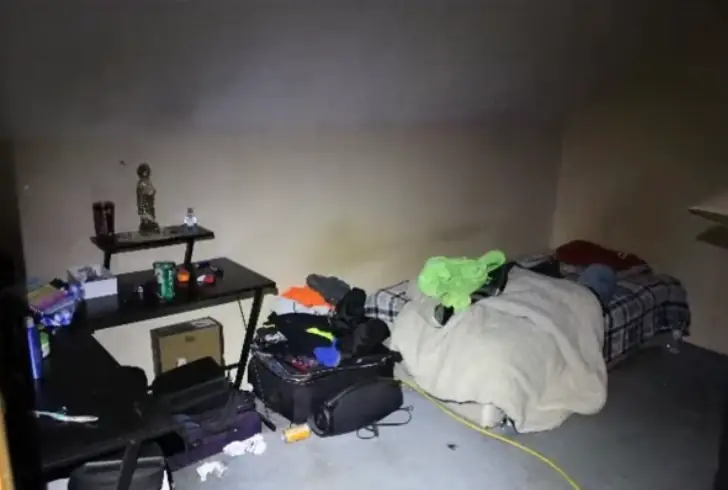
Federal cases against employers require extensive evidence. In the Michigan case, authorities monitored company vans, financial transactions, employee communications, and housing arrangements for years.
Key findings included:
1. Between January 2022 and December 2024, Moises and Raquel Orduna-Rios hired over 200 undocumented workers.
2. Many workers lived in run-down motels and houses provided by the company.
3. Undercover operations and employee interviews helped establish intent. For instance, one worker told an undercover agent that the company would still hire undocumented individuals and provide housing, vehicles, tools, and crews.
4. Messages between Moises Orduna-Rios and employees revealed concerns about the workers’ legal status and strategies to avoid detection. A February 1 message advised employees to limit errands and avoid gatherings.
After nearly a decade of surveillance and investigation, the Orduna-Rios couple was arrested on November 18, 2025.
Limited Accountability and Ongoing Challenges
The Michigan case illustrates why employer accountability is rare:
1. High legal thresholds make proving intent difficult.
2. E-Verify and similar tools are underutilized.
3. Businesses can operate off the books or hire contractors to reduce liability.
4. Fines often fail to deter profitable exploitation of undocumented labor.
While federal raids continue, enforcement remains uneven. Workers face immediate consequences, yet most employers avoid criminal prosecution. Experts warn this imbalance continues to undermine workplace law and immigration policy.
Understanding the Imbalance
The gap between enforcement for workers and employers highlights a systemic challenge. Efforts to deter undocumented employment through fines or criminal prosecution are limited by legal standards, loopholes, and inconsistent policy priorities.
Cases like the Orduna-Rios arrest are rare exceptions rather than the rule. Until laws, verification systems, and enforcement practices are strengthened and uniformly applied, employers will continue to face minimal risk compared with the immediate repercussions for undocumented workers.